
 beulah
Yes, you can camp year-round near Aaron Provincial Park, and the surrounding campgrounds keep select facilities open through winter, though amenities and access shift dramatically with the seasons. From ice fishing and snowmobiling in January to paddling and hiking in July, four-season campgrounds in this corner of northwestern Ontario give you a base for outdoor adventure no matter when you visit.
The catch? Most parks operate on a bare-bones model outside the summer months. That means pit toilets instead of flush facilities, self-registration instead of a staffed gatehouse, and plowed access roads only to certain loops. But for travelers willing to pack extra gear and embrace a quieter, more rugged experience, the payoff is big. You’ll camp alongside locals who know the best fishing holes, watch the northern lights from your site without summer crowds, and pay a fraction of peak-season rates.
Planning a winter or shoulder-season trip requires different prep than a July camping weekend. Water taps shut down by mid-October, and cell service remains spotty year-round. Still, the region’s logging roads stay active, local outfitters rent gear for cold-weather camping, and a handful of private campgrounds near Dryden offer heated cabins and RV hookups even when snow piles high. Whether you’re testing a new four-season tent or simply chasing solitude, this guide walks you through what’s open, what to expect, and how to make the most of each season on the ground.
Why Choose a 4 Season Campground at Aaron Provincial Park
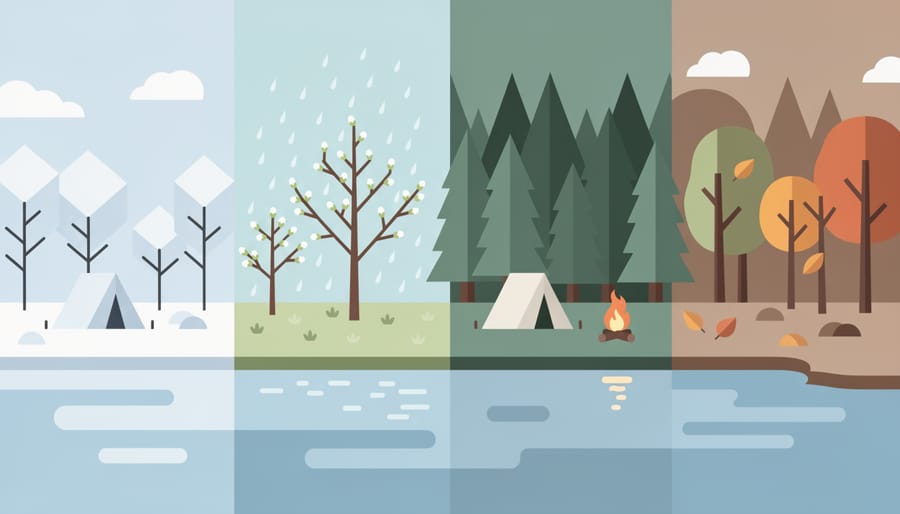
Aaron Provincial Park stands out among Northwestern Ontario campgrounds because its year-round access means you’re not locked into the short summer window most parks offer. Whether you’re planning a last-minute spring fishing trip, a quiet October getaway, or a winter adventure on the ice, you don’t need to wait for Victoria Day weekend or scramble before Thanksgiving closures. The park stays open, and that flexibility changes how you can experience this corner of the boreal forest.
Each season brings its own character to Aaron. Summer delivers the classic Ontario camping experience, paddling Echo Lake, swimming off the dock, hiking under a canopy of jack pine and black spruce. But spring opens up some of the year’s best fishing as walleye and northern pike feed aggressively after ice-out. Fall wraps the forest in rust and gold, the bugs disappear, and you’ll often have entire sections of the campground to yourself. Winter transforms the park into a frozen expanse perfect for ice fishing, snowshoeing, and the kind of stillness you only find when the crowds are gone and snow muffles every sound.
For campers who crave solitude, shoulder seasons at Aaron deliver what crowded July weekends can’t. You get the same wilderness setting, rocky shorelines, dense forest, wildlife sightings, without competing for a lakeside site or waiting for the comfort station. And because Aaron sits just 25 minutes from Dryden, you’re never far from supplies or services if the weather turns. It’s accessible wilderness, genuinely available 12 months a year.
What to Expect in Each Season at Aaron Provincial Park
1. Spring Camping (April, May)
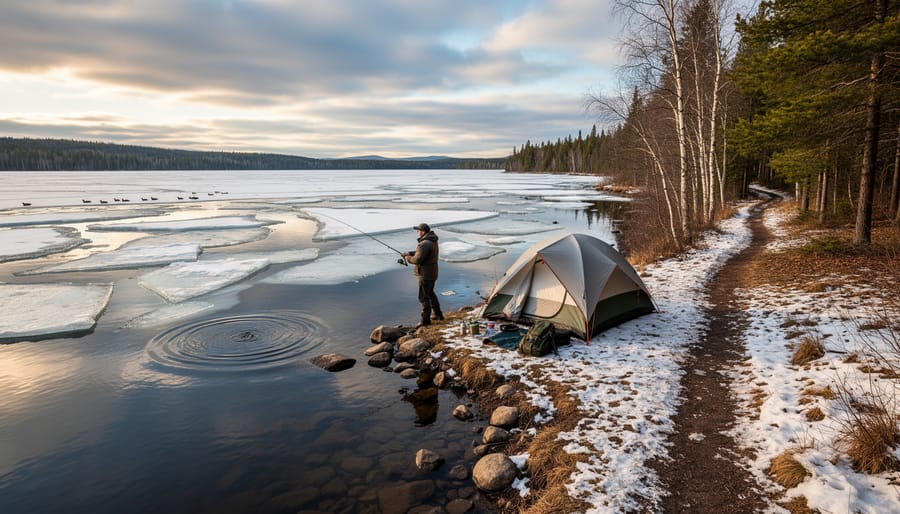
Spring at Aaron Provincial Park arrives gradually, with ice-out typically occurring in late April. This transitional period offers some of the year’s best fishing as hungry walleye and northern pike become active in the warming shallows. Temperatures range from near-freezing overnight to 10-15°C during the day, so layered clothing and a warm sleeping bag rated for below-zero conditions are essential.
The park roads and campground sites are fully accessible by mid-April, though you’ll encounter muddy conditions on trails and around your site. Bring extra tarps and waterproof boots, spring melt creates puddles and soft ground that can bog down vehicles on unpaved areas. Wildlife emerges from winter dormancy, making this an excellent time for birdwatching as migratory species return and black bears leave their dens.
Expect unpredictable weather: sunny mornings can turn into cold rain or even snow by afternoon. Pack rain gear, extra firewood (it may be damp), and plan flexible activities. The reward? You’ll often have the campground nearly to yourself, with prime access to thawing lakes before the summer crowds arrive.
2. Summer Camping (June, August)
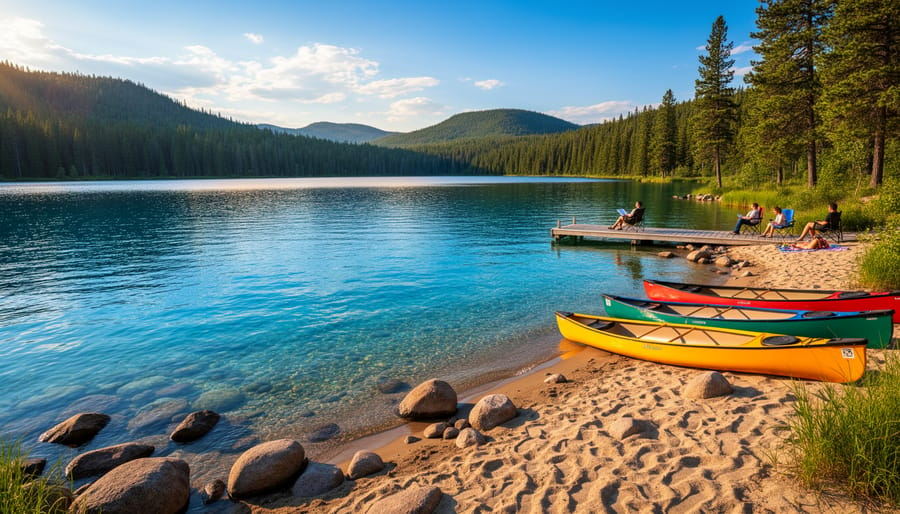
Summer transforms Aaron Provincial Park into a bustling hub of outdoor activity, with June through August drawing families and adventurers eager to make the most of northern Ontario’s short but glorious warm season. Daytime temperatures typically hover between 20-25°C, creating ideal conditions for swimming off the beach or paddling the park’s quiet bays and interconnected waterways.
The extended daylight hours, sunset doesn’t arrive until after 9 PM in late June, give you plenty of time to explore the hiking trails that wind through boreal forest and along rocky shorelines. You’ll find walleye and pike fishing remains excellent throughout summer, though early morning and evening sessions work best as the water warms.
This is peak season at the campground, and sites fill quickly on weekends and holiday periods. Families favor summer for obvious reasons: warm water, bug season mostly passed by July, and the full range of park facilities operating at capacity. If you’re planning a summer visit, book your site well in advance, at least several weeks ahead for July and August weekends. The tradeoff for busier campgrounds is a lively atmosphere and the chance to connect with fellow campers who’ve made Aaron part of their summer tradition.
3. Fall Camping (September, October)
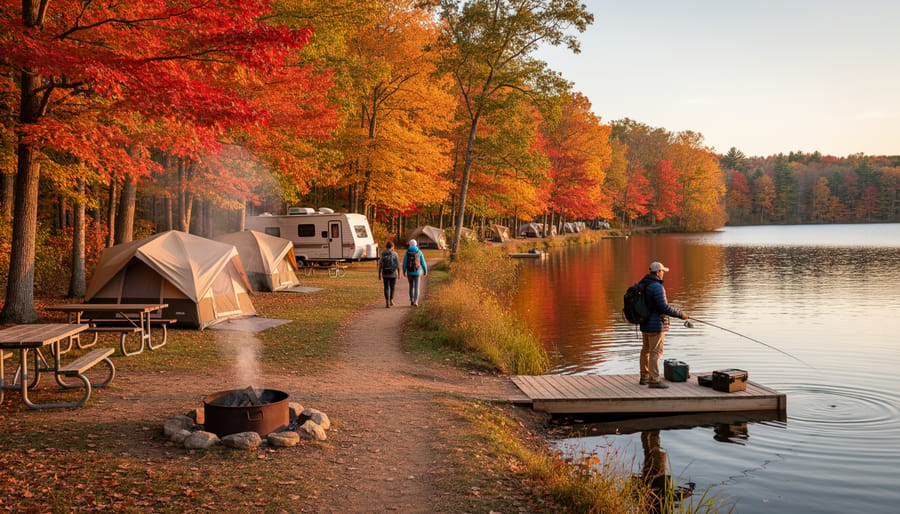
September and October transform Aaron Provincial Park into a photographer’s dream, with the forest canopy exploding in reds, oranges, and golds. Daytime highs range from 10-18°C, dropping near freezing at night, so pack layers and a warm sleeping bag rated for shoulder-season conditions.
Fall fishing ranks among the year’s best. Walleye and northern pike feed aggressively before winter, and you’ll have the lake largely to yourself compared to the summer rush. Bug populations disappear after the first hard frost, making evening campfires far more enjoyable.
Expect significantly quieter campgrounds. The families have returned to school routines, leaving midweek sites often empty. You can snag prime waterfront spots without advance booking in most cases.
Ontario’s moose and bear hunting seasons run through October and into early November. While hunting is prohibited within provincial park boundaries, you’ll hear shots from adjacent crown land. Wear bright orange if you hike beyond park limits, and expect increased truck traffic on access roads during opening weekends. The hunting activity doesn’t impact the camping experience inside Aaron’s boundaries, but it’s worth noting for trip planning and trail use.
4. Winter Camping (November, March)
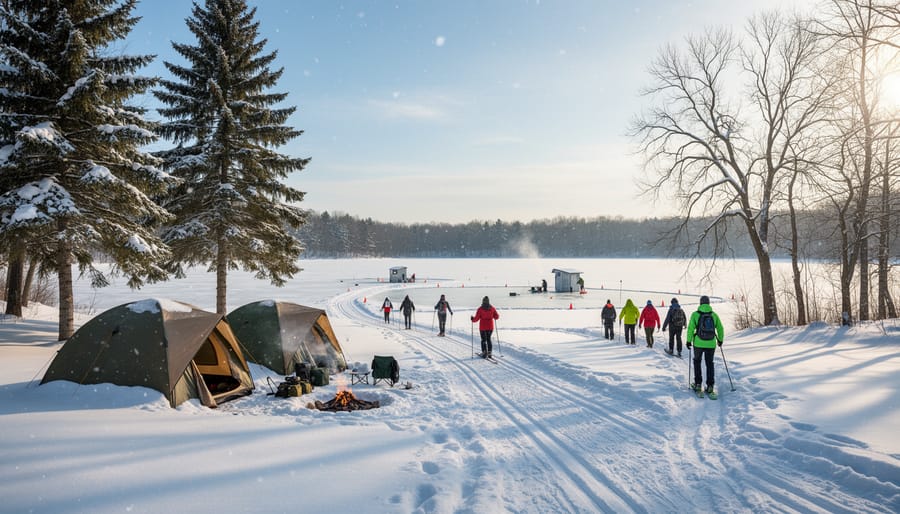
Winter transforms Aaron Provincial Park into a remote, snow-covered wilderness that demands proper preparation and cold-weather camping experience. Expect daytime highs around -10°C to -20°C (14°F to -4°F) from November through March, with nighttime temperatures dropping considerably lower. Snow accumulation creates stunning scenery but also challenges: access roads may require 4×4 vehicles, and you’ll need a four-season tent, a cold-rated sleeping bag (at minimum -20°C), insulated sleeping pads, and reliable heat sources.
Ice fishing draws many winter visitors once the lake freezes solid, typically by late December. You can access fishing spots directly from shore or by snowshoe across the ice. The park’s trail network becomes excellent for cross-country skiing and snowshoeing, offering quiet routes through snow-laden forest. Winter campers should bring extra fuel, layered clothing systems, and emergency supplies, help is far away if conditions turn harsh. Winter activities including ice fishing attract experienced outdoors enthusiasts who value solitude and aren’t intimidated by sub-zero camping. This isn’t beginner territory: know your limits and prepare accordingly.
Campground Facilities and Site Types
Aaron Provincial Park maintains 21 campsites that are technically accessible year-round, though “year-round access” comes with important seasonal realities campers need to understand before booking.
The campground offers a straightforward mix of site types. You’ll find both electrical and non-electrical options, with the electrical sites providing 15-amp service suitable for smaller RVs and trailers during warmer months. The non-electrical sites work well for tent campers and those who prefer a more backcountry feel while still having vehicle access.
| Site Type | Hookups/Services | Seasonal Availability | Best Season |
|---|---|---|---|
| Electrical Sites | 15-amp power, fire pit, picnic table | May, October (reliable) | Summer, early fall |
| Non-Electrical Sites | Fire pit, picnic table | Year-round | All seasons for experienced campers |
| Day-Use Area | Parking, beach access, vault toilet | Year-round | Summer for swimming, winter for ice fishing |
Here’s what year-round actually means in practice: while the gates remain unlocked and you can drive in to camp any month, most serviced facilities shut down after Thanksgiving. The comfort station with flush toilets and running water typically closes in mid-October and doesn’t reopen until early May. During winter months, you’re relying on vault toilets only.
No showers are available at any time of year. The park was designed as a more rustic camping experience from the start, so campers accustomed to full-service campgrounds should adjust expectations accordingly.
Electrical hookups become unreliable once temperatures consistently drop below freezing. While the power pedestals remain in place, Ontario Parks doesn’t guarantee winter electrical service, and many campers report hookups being shut off entirely by December to prevent damage from ice buildup.
The sites themselves are fairly level and well-spaced, offering decent privacy with natural tree buffers between most spots. Each site includes a metal fire ring and wooden picnic table that stay in place through winter, though you’ll want to brush snow off before use during colder months.
Getting There and Practical Information
Aaron Provincial Park sits roughly 50 kilometers northwest of Dryden along Highway 502. The route is straightforward: head north from Dryden on Highway 601, then turn west onto Highway 502 and follow it to the park entrance. The road is paved and well-maintained through most of the year, but winter visitors should expect snow-covered sections from December through March and plan for slower travel. A vehicle with good winter tires is essential during cold months, and checking road conditions with the Ontario Ministry of Transportation before departure is smart practice.
Parking is available at the main campground area and near the day-use beach. In summer, spots fill quickly on weekends, so arriving before noon gives you better options. Winter parking is plowed regularly, but you may need to brush snow off your vehicle after overnight storms.
- Location: 50 km northwest of Dryden via Highway 601 and Highway 502
- Reservations: Book through Ontario Parks online system or call 1-888-ONT-PARK; winter sites can often be reserved closer to arrival
- Fees: $42, $51 per night for electrical sites in peak season; $30, $38 for non-electrical; off-season rates drop by about 30 percent
- What to bring: Summer requires bug spray and sunscreen; spring and fall need rain gear and layers; winter demands serious cold-weather camping gear, extra fuel, and emergency supplies
The reservation system opens in January for the upcoming camping season. Sites book fast for July and August, but spring and fall dates usually have availability even a week or two out. Winter camping rarely requires advance booking unless you’re planning a holiday weekend trip.
Check-in runs from 2 p.m. to 9 p.m., with checkout by 11 a.m. Winter hours can be more flexible since fewer staff are on-site, but call ahead if you’re arriving late. Firewood sales happen at the park office during staffed hours in summer, but winter campers should bring their own supply or purchase it in Dryden before heading out. Cutting live trees or gathering deadfall is prohibited.
Day-use visitors pay a vehicle permit fee at the gate, which in 2026 runs about $15, $18 per car depending on the season. The beach area and trails remain open to day users year-round, though winter access means you’re on your own for trail-breaking after fresh snow.
Local Tips for Year-Round Camping at Aaron
Locals who camp at Aaron year-round know that timing matters. Spring (late April into May) and fall (mid-September through October) offer the quietest campgrounds and best fishing, while mid-July through early August brings families and peak crowds. If you want solitude and don’t mind cooler nights, plan your visit outside the summer school break window.
Weather in northwestern Ontario shifts fast, especially during shoulder seasons. Pack layers and rain gear no matter when you visit. A warm sleeping bag rated at least ten degrees below the forecast low will save a miserable night, and bringing a backup propane stove means you can cook even if rain or fire bans cancel your campfire plans.
Wildlife encounters happen in every season. Black bears are active from spring through fall, so store all food and scented items in your vehicle or a bear-proof container. In spring, give moose plenty of space, especially cows with calves. Winter campers should watch for wolf tracks and never approach or feed any animals.
Stock up in Dryden before heading to the park. The Safeway and Canadian Tire on Government Street carry groceries, camping supplies, propane, firewood, and fishing tackle. In winter, grab extra batteries, hand warmers, and windshield washer fluid. The park has no on-site store, and cell service is spotty, so plan ahead.
One lesser-known highlight: sunrise over Eagle Lake in October, when mist rises off the water and loons call before their migration south. Experienced campers say it’s worth the early wake-up.
Frequently Asked Questions
Can I reserve a campsite at Aaron Provincial Park year-round?
The park operates a reservation system through Ontario Parks for the main camping season (typically May through October), but winter camping runs on a first-come, first-served basis from November through early spring. Check the Ontario Parks website for exact seasonal cutoff dates as they can shift slightly each year.
What facilities close during winter at the campground?
Comfort stations with running water close after Thanksgiving weekend, and campers rely on vault toilets through the winter months. The park office operates on reduced hours or closes entirely in winter, so plan to be self-sufficient for firewood, supplies, and any emergency needs.
Is Aaron suitable for RV camping in all four seasons?
Summer and fall work well for most RVs, but winter camping presents real challenges: no water hookups operate below freezing, roads may not be plowed to all sites, and you’ll need a properly winterized unit with adequate heating. Spring’s mud season can make larger RVs difficult to maneuver on unpaved campground roads.
Do I need a park permit if I’m only visiting for the day in winter?
Yes, day-use permits are required year-round whenever the park is accessible, even in winter. You can purchase permits at the gatehouse when staff are present or through self-serve kiosks during off-season periods.
Most confusion around Aaron’s year-round status comes from the difference between “open” and “fully serviced.” The park never truly closes, but the level of service and facility access changes dramatically between June and January. If you’re planning a shoulder season or winter trip, call ahead to confirm current conditions rather than assuming summer-level amenities will be available. Road access can be the deciding factor: a November snowstorm might make the park technically open but practically unreachable without proper winter tires and experience driving in serious snow.