
 beulah
CJC-1295 With DAC lasts far longer than CJC-1295 No DAC, and that single difference shapes everything else about the two versions. The No DAC form (also sold in blends like https://kylopeptides.com/product/cjc-1295-ipamorelin-no-dac/) clears the body in roughly 30 minutes, while the DAC version is generally cited at around 6 to 8 days, thanks to a chemical attachment that lets it bind to proteins in the blood and hang around.
That gap isn’t just a number on a spec sheet. A short half-life means short, pulse-like signals, which is why people who want something closer to the body’s natural rhythm often look at a blend like that. A long half-life means a steady, sustained presence instead.
Think of it like fishing on Wabigoon Lake. One approach is a quick, well-timed cast. The other is leaving a line in the water all day. Both have their place, but they behave very differently.
Below, you’ll find an at-a-glance table, plain-language definitions of each version, and a breakdown of what the half-life difference means in practice. Everything here is educational, not a recommendation, so you can weigh the differences for yourself.
CJC-1295 No DAC vs. With DAC at a Glance
If you only have a minute, this is the part to read. Think of it like a quick map check before you head out: the two versions of CJC-1295 share a name, but they behave very differently once they’re in the body. Take a look, then, if the fresh air is calling, plan your hike and come back to the details later.
| Feature | CJC-1295 No DAC | CJC-1295 With DAC |
|---|---|---|
| Approximate half-life | About 30 minutes | Roughly 6 to 8 days |
| Typical dosing frequency (as reported) | More frequent | Less frequent |
| Growth hormone release pattern | Pulsatile, short bursts | Sustained, steadier signal |
| How it’s built | Modified GRF 1-29, no add-on | Same peptide plus a Drug Affinity Complex |
In short, No DAC is the quick ripple on a calm lake, while With DAC is the steady current of a river. Both are discussed in research settings as growth hormone-releasing peptides, but the half-life gap shapes just about everything else, from how often they’re used to how the signal looks over time.
Keep in mind that these numbers are approximate and vary from source to source. The sections below unpack each difference in plain language, so nothing here needs prior knowledge of the topic.
What Each Version of CJC-1295 Is
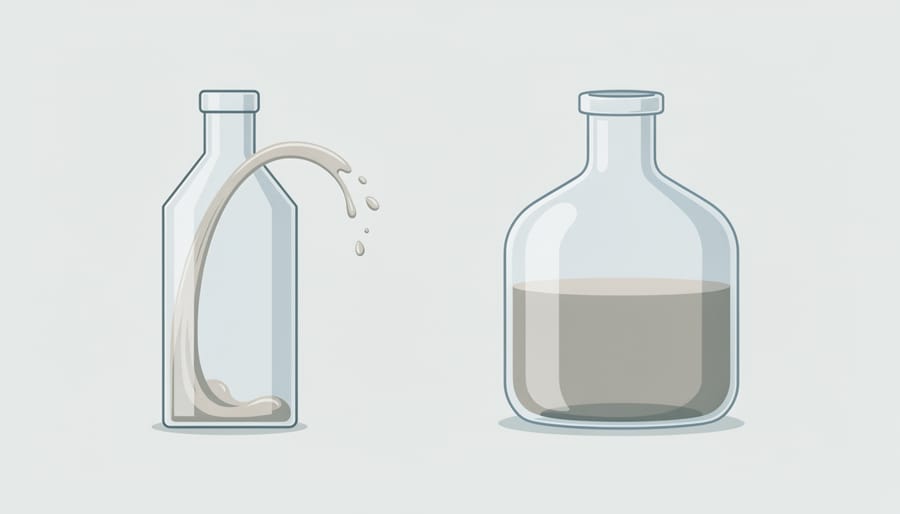
CJC-1295 No DAC (Modified GRF 1-29)
CJC-1295 No DAC is the shorter-acting version of the peptide. You’ll also see it called Modified GRF 1-29, and the two names point to the same thing. GRF 1-29 is the first 29 amino acids of growth hormone-releasing hormone, the part of the molecule that does the real work. “Modified” means a few of those amino acids were swapped out to make the peptide sturdier, so it doesn’t break down quite as fast as the natural version would.
Even with those tweaks, its half-life is short, commonly cited at around 30 minutes. Think of a stone skipping across a quiet lake: a quick ripple, then calm water again.
That brief signal is the whole appeal. Your body naturally releases growth hormone in pulses rather than one steady stream, and a short-acting peptide fits that rhythm more closely. It nudges the system, then steps aside. That’s why it’s often described as the “pulse-like” option, and why it tends to be discussed alongside more frequent timing than its longer-lasting cousin.
CJC-1295 With DAC (Drug Affinity Complex)
CJC-1295 With DAC starts with the same basic peptide as the shorter version, then adds one extra piece. That piece is called the Drug Affinity Complex, or DAC for short. Think of it as a small chemical hook attached to the peptide.
Here’s why the hook matters. Once it’s in the bloodstream, the DAC lets the peptide latch onto a common blood protein called albumin. Albumin acts a bit like a slow, steady river current, carrying the peptide along instead of letting the body break it down right away. The peptide stays protected and active for much longer than it otherwise would.
The result is a dramatic change in staying power. Where the No DAC version fades in around half an hour, the With DAC version is commonly cited as lasting roughly 6 to 8 days. That’s the whole story behind the half-life gap.
It also means the signal is more continuous than pulse-like, which raises different questions we’ll get to shortly.
A Few Terms Worth Knowing
Before we go further, here are a few words you’ll see often. Think of this as a quick trail map for the terminology.
- Half-life
- The time it takes for half of a substance to be cleared from the body. A shorter half-life means it fades quickly, while a longer one means it sticks around.
- Peptide
- A short chain of amino acids, the building blocks of proteins. Many of the body’s signaling molecules are peptides.
- GHRH
- Short for growth hormone-releasing hormone, a natural signal that prompts the pituitary gland to release growth hormone.
- Pulsatile release
- Hormone release in short bursts rather than a constant stream, the way the body naturally tends to do it.
- Albumin binding
- Attaching to albumin, a common protein in the blood. This is how the DAC version hitches a ride and lingers far longer.
Keep these five in your back pocket, and the comparison ahead will read a lot more smoothly.
CJC-1295 No DAC vs. With DAC, Dimension by Dimension

Half-Life: Minutes vs. Days
Half-life is simply the time it takes for the amount of a substance in your body to drop by half. Think of a ripple on a lake. A small splash fades fast, while a steady river current keeps moving long after.
CJC-1295 No DAC is the quick ripple. It’s commonly cited as having a half-life of around 30 minutes. That means the peptide is largely cleared within a few hours, which is why it’s often described as producing a short, pulse-like signal.
CJC-1295 With DAC is the river. Its half-life is commonly cited at roughly 6 to 8 days, so the peptide lingers and keeps signaling for much longer. That’s a difference of minutes versus days, and it’s the single biggest thing separating the two versions.
So why does the DAC change things so dramatically? DAC stands for Drug Affinity Complex. It’s a chemical attachment that lets the peptide bind to albumin, a protein that circulates in your blood. Once it’s hitched to albumin, the peptide is shielded from the enzymes that would normally break it down quickly. It’s a bit like a canoe getting towed behind a steady boat instead of drifting alone in the current.
A quick caution: these numbers aren’t set in stone. Different sources report different figures, and much of the data comes from limited studies, so treat them as ballpark estimates rather than exact values. Half-life also doesn’t tell you everything about how a substance behaves in a person.
This is general educational information, not medical advice. If you’re weighing any health decision, a qualified healthcare professional is the right person to ask.
Release Pattern and Dosing Frequency
Half-life shapes the rhythm of the signal more than anything else. Think of a short half-life as a skipped stone on a calm lake: one quick splash, a few ripples, then back to stillness. A long half-life is more like the steady current of a river that just keeps flowing.
CJC-1295 No DAC clears the body in roughly half an hour, so it produces a brief, pulse-like signal. That mirrors how the body naturally releases growth hormone in bursts. Because the effect fades fast, protocols described in the literature tend to involve more frequent administrations, often timed around specific parts of the day.
With DAC, the peptide binds to proteins in the blood and sticks around for days. The signal is more sustained and less pulse-like, so it’s typically described with much less frequent dosing, sometimes just once or twice a week.
Here’s how the two patterns compare in plain terms:
- No DAC: a short, pulse-like signal that closely resembles natural release.
- No DAC: reported with more frequent dosing and more flexible timing.
- With DAC: a steadier, sustained signal that lingers over several days.
- With DAC: reported with fewer administrations, though the signal is harder to “turn off” once it’s in the body.
None of this is a recommendation. It simply describes what researchers have reported, and the right approach for any individual is a conversation for a qualified healthcare professional.
Safety, Side Effects, and Research Limits
Both versions of CJC-1295 are still best described as research compounds. Neither is an approved therapy in Canada, the United States, or most other places, so there’s no official dosing guidance or long-term safety record to lean on. Most of what’s published comes from small, short studies, and the human data is limited.
That’s where the half-life difference matters. A short-acting peptide like the No DAC version produces a brief signal that fades within the hour, closer to how the body naturally pulses. The With DAC version keeps a signal in the system for days, and researchers have raised different questions about that steady, continuous exposure. Reported effects in the literature include flushing, headaches, water retention, and tingling, but the picture is incomplete, and nobody can say with confidence how a sustained signal behaves over months or years.
Products sold online also vary widely in purity and labelling, which adds another layer of uncertainty that has nothing to do with the molecule itself.
So the honest takeaway is caution. If you’re curious about any peptide for health reasons, talk with a qualified healthcare professional who knows your history before making decisions. Think of it a bit like planning a backcountry trip: you’d check conditions and ask someone experienced first, and it’s worth taking the same care to find balance between curiosity and caution.
Which CJC-1295 Version Fits Which Goal?

Think of it like planning a trip around Dryden. Some folks want a quick afternoon paddle with flexible timing, and others want a longer, steady stay that runs on its own schedule. If you’re weighing priorities, it can help to choose tour options by asking what matters most to you, and the same kind of thinking applies here.
CJC-1295 No DAC tends to suit people who value a short, pulse-like signal that resembles the body’s natural rhythm. Its brief half-life means timing stays flexible, though it also means more frequent administrations if that is the approach being discussed.
CJC-1295 With DAC tends to appeal to those who prefer fewer administrations and a steady, sustained signal. The trade-off is less flexibility: once it’s in the system, it lingers for days, and that raises different questions than a quick pulse does.
Then there’s a third group: anyone who isn’t sure, has a health condition, or takes other medications. If that sounds like you, hold off and talk to a qualified healthcare professional first. Neither version is an approved therapy, and human data is limited, so a personalized conversation beats guesswork every time.
Common Questions About CJC-1295 Half-Life
Is CJC-1295 with DAC the same as Ipamorelin?
No. They’re different peptides. CJC-1295 mimics growth hormone-releasing hormone, while Ipamorelin works through a separate pathway (it’s a ghrelin receptor agonist). People sometimes mention them together, but they aren’t interchangeable.
Why is No DAC sometimes called Modified GRF 1-29?
It’s the same short-acting peptide, just labelled by its structure. It’s a modified version of the first 29 amino acids of natural growth hormone-releasing hormone, with no DAC attachment.
How long does each stay active?
No DAC is commonly cited at about 30 minutes, while With DAC is often cited at roughly 6 to 8 days. Figures vary between sources, so treat them as ballpark numbers.
Is CJC-1295 legal or approved?
It isn’t an approved therapy, and its legal status varies by country. Rules can change, so check current regulations and speak with a qualified healthcare professional.
Can the two versions be combined? The research literature doesn’t offer clear guidance on this, and mixing a short pulse with a long, steady signal raises questions nobody has settled. That’s a conversation for a doctor, not a guess.
Where can you learn more safely? Start with a healthcare professional who knows your history, then look to peer-reviewed sources and official regulator pages rather than forum posts or sellers’ marketing. It also helps to jot down questions as they come up, and if that sounds like a good habit, you could keep a digital diary of what you read and what you want to ask at your next appointment. A little organization goes a long way when the topic is this technical.
So there’s the short version: CJC-1295 No DAC works in a brief, pulse-like window of about half an hour, while the With DAC version sticks around for days. Everything else, from dosing rhythm to the open questions about safety, flows from that one difference.
Still, a comparison like this can only take you so far. It’s general educational information, and the research on both versions is limited. If you’re weighing anything that touches your health, sit down with a qualified healthcare professional who knows your situation. They’ll give you far better guidance than any article can.
Now, we’ll admit this was a detour from what we usually do around here. The Dryden Observer is happiest when it’s pointing you toward a quiet bay on Wabigoon Lake, a good walleye spot, a trail that smells of pine after rain, or a local spot worth stopping for a coffee and a chat. So when you’re ready for a change of pace, come on up and see Dryden for yourself. We’ll save you a spot by the water.